
Gelleråsen Arena (Karlskoga Motorstadion)
Gelleråsen Arena (Karlskoga Motorstadion) at a glance
- Location
- Karlskoga, Örebro County
- Type
- road course
- Length
- 2.35 km (1.46 mi)
- Turns
- 11
- Direction
- clockwise
- Surface
- asphalt
- Opened
- 1949
- Address
- Gelleråsen
- Website
- gellerasen.se
Track map and layout
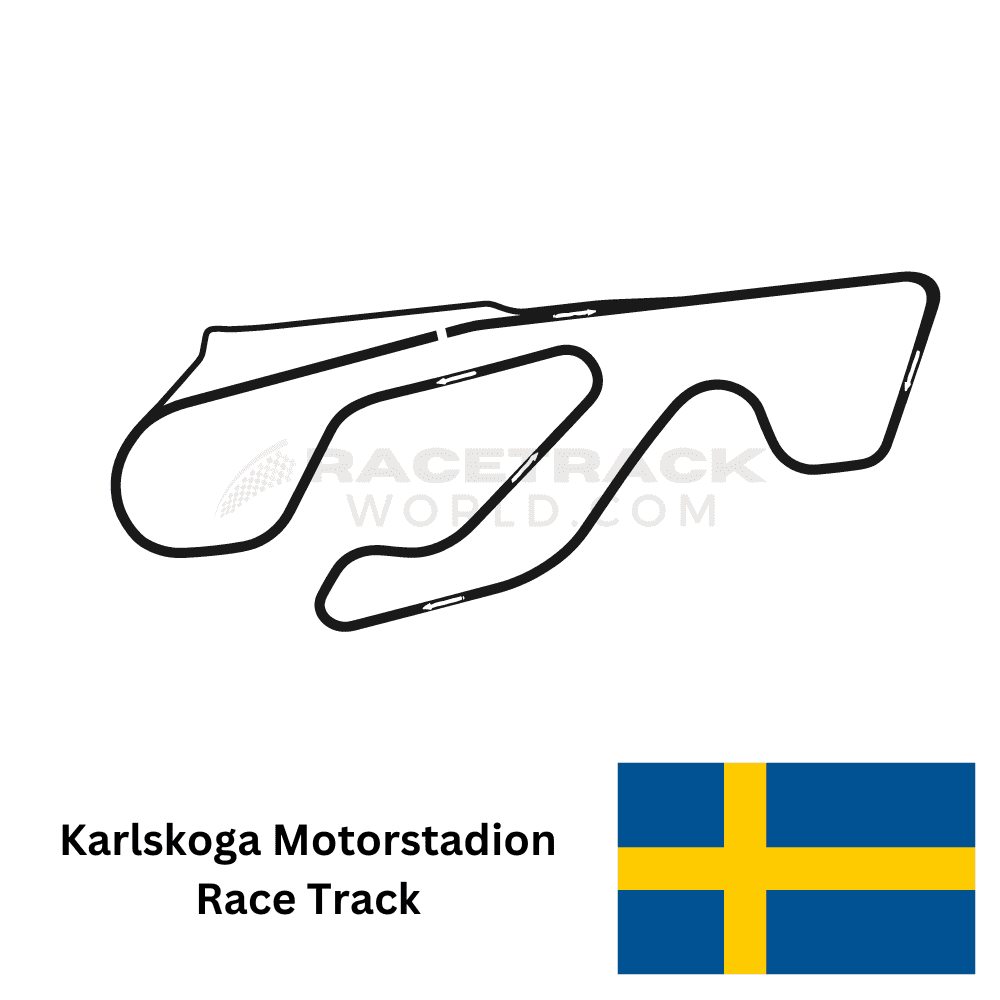
Gelleråsen Arena, better known as Karlskoga Motorstadion, is Sweden's oldest permanent racing circuit, sited on high ground about 6 km north of Karlskoga in Örebro County. Opened in 1949 as a 1.55 km dirt track, it was paved in 1952 and progressively lengthened through the 1950s, reaching over 3 km with the addition of the Velodromkurvan banked section in 1958. Safety-driven reconfigurations, including the removal of the old velodrome banking, brought the lap down to its current 2.350 km, 11-turn layout, which retains the circuit's reputation as a technical, undulating track that has tested generations of Swedish racers.
Configurations
| Layout | Length | Used for |
|---|---|---|
| Current circuit | 2.35 km | 2.350 km, 11 turns |
| Historic full circuit (1958-1992) | 3.17 km | 3.172 km, including the banked Velodromkurvan section, later removed |
Events and race weekends
Karlskoga Motorstadion is best known for Kanonloppet, Sweden's oldest continuously associated motor race, first run in 1950 and won that year by Stirling Moss; the circuit also hosted non-championship Formula One races in 1961-1963 with drivers including Moss, Jim Clark and Jack Brabham. In the modern era it has been a regular venue for the Swedish/Scandinavian Touring Car Championship, hosting rounds in most seasons from 1996 to 2022, alongside Porsche Carrera Cup Scandinavia and other national racing.
| Event | Series | When | Notes |
|---|---|---|---|
| Kanonloppet | Swedish national racing | varies | run at the circuit from 1950-1975 and again from 1996 to the present |
| STCC round | STCC GT4 Nordic | August | series paused 2025-26; returns at Kanonloppet on 20-21 August 2027 under GT4 rules |
Getting there and parking
The circuit sits at Gelleråsen, about 6 km north of Karlskoga and roughly 50 km west of Örebro in central Sweden. Most visitors drive; Karlskoga has a local railway connection and bus links to Örebro, from where a rental car or taxi covers the final leg to the circuit.
- Örebro Airport (ORB) · about 45 min drive
- Stockholm Arlanda Airport (ARN) · about 150 min drive
Parking
On-site parking is available for event days; pricing is set by the event promoter.
Örebro is the best base for wider travel connections, with a straightforward 45-minute drive out to the circuit.
Hotels and camping near Gelleråsen Arena (Karlskoga Motorstadion)
Karlskoga, a few minutes from the circuit, has a modest range of hotels suited to a short event visit. Örebro, about 50 km away, offers a much wider choice of accommodation and better rail and air links for visitors combining a trip with wider Swedish travel.
Where to look
Karlskoga town centre for proximity; Örebro for a wider choice of hotels and transport links.
Track days, driving experiences and lap records
Gelleråsen Arena hosts club racing, driver training and manufacturer or private test days through the season alongside its championship race weekends, generally arranged through the circuit or visiting organisers.
Who runs days here
Lap records
| Category | Time | Driver | Car | Year |
|---|---|---|---|---|
| Outright (current circuit) | 1:03.470 | Lukas Sundahl | Porsche 911 GT3 Cup (Carrera Cup) | 2024 |
Spectator guide
As Sweden's oldest circuit, Gelleråsen combines a long, undulating lap with vantage points that let spectators see multiple corners from a single spot, particularly around the site of the old velodrome banking.
Seating
Grandstand seating is concentrated near the start-finish straight; much of the rest of the lap is viewed from grass banking.
Best places to watch
Elevated ground near the former Velodromkurvan area gives views across several of the circuit's technical corners.
Weather
- May-September (main season): typical central Swedish summer, highs around 16-22°C
History of Gelleråsen Arena (Karlskoga Motorstadion)
Sweden's oldest permanent circuit
Karlskoga Motorstadion, at Gelleråsen north of Karlskoga in Örebro County, opened in 1949 as a 1.55 km dirt track and is recognised as Sweden's oldest permanent racing circuit. The inaugural running of Kanonloppet, on 4 June 1950, was won by a young Stirling Moss, immediately putting the new Swedish venue on the international map. The track was paved with asphalt in 1952 and extended repeatedly through the decade, growing past 3 km with the addition of the banked Velodromkurvan section in 1958.
Formula One and tragedy
The circuit's growing reputation saw it host non-championship Formula One races between 1961 and 1963, attracting a field that included Moss, Jim Clark and Jack Brabham to compete on Swedish soil outside the world championship. The circuit's history was marked by tragedy on 8 August 1970, when two touring cars crashed into spectators during a race, killing five people and forcing a two-year closure while safety measures were overhauled.
Reconfiguration and modern racing
Safety concerns eventually led to the removal of the old banked velodrome section and a shortening of the lap, first to 2.530 km in 1992 and later to today's 2.350 km, 11-turn configuration. Despite the changes, the circuit has remained central to Swedish motorsport, hosting the Swedish/Scandinavian Touring Car Championship in most seasons from 1996 to 2022 and Porsche Carrera Cup Scandinavia rounds in the current era.
A living piece of Swedish racing history
Kanonloppet itself returned to the calendar in 1996 after a two-decade absence and continues to be run at Gelleråsen today, linking the circuit's earliest days directly to its modern racing programme. As Sweden's oldest active circuit, Gelleråsen Arena remains both a working national racing venue and a site of considerable historical significance for Scandinavian motorsport.
Frequently asked questions
How long is Gelleråsen Arena (Karlskoga Motorstadion)?+
The current circuit is 2.350 km (1.460 miles) with 11 turns; it was over 3 km at its longest, before the banked Velodromkurvan section was removed in later safety-driven reconfigurations.
Why is Karlskoga Motorstadion historically significant?+
Opened in 1949, it is recognised as Sweden's oldest permanent racing circuit and hosted non-championship Formula One races from 1961 to 1963 with drivers including Stirling Moss, Jim Clark and Jack Brabham.
What is Kanonloppet?+
Kanonloppet is Sweden's historic annual race at the circuit, first run in 1950 (won by Stirling Moss), held through 1975, and revived again from 1996 to the present.
Has Karlskoga Motorstadion hosted the Swedish Touring Car Championship?+
Yes. The circuit, also known as Gelleråsen Arena, hosted the Swedish/Scandinavian Touring Car Championship in most seasons from 1996 to 2022.
Where do visitors stay near Gelleråsen Arena?+
Karlskoga, a few minutes from the circuit, has the closest hotels; Örebro, about 50 km away, offers a wider range of accommodation and transport links.
Other tracks nearby
- Skövde Circuit · 108 km · historic circuit (defunct)
- Kinnekulle Ring · 113 km · road course
- Mantorp Park · 121 km · road course
- Hedemora TT Circuit · 130 km · historic circuit (defunct)
- Rudskogen Motorsenter · 184 km · road course
- Glimminge Motorstadion · 185 km · motocross
Facts checked against 3 sources including the official circuit website. Last reviewed 2026-09-11.