
Las Vegas Motor Speedway
Las Vegas Motor Speedway at a glance
- Location
- Las Vegas, Nevada
- Type
- oval
- Length
- 1.5 mi (2.414 km)
- Turns
- 4
- Direction
- counter-clockwise
- Banking
- 20° in the turns, 9° on the frontstretch and backstretch
- Surface
- asphalt
- Opened
- 1996
- Owner
- Speedway Motorsports
- Capacity
- 80,000
- Address
- 7000 Las Vegas Blvd. N
- Phone
- +1-800-644-4444
- Website
- lvms.com
Track map and layout
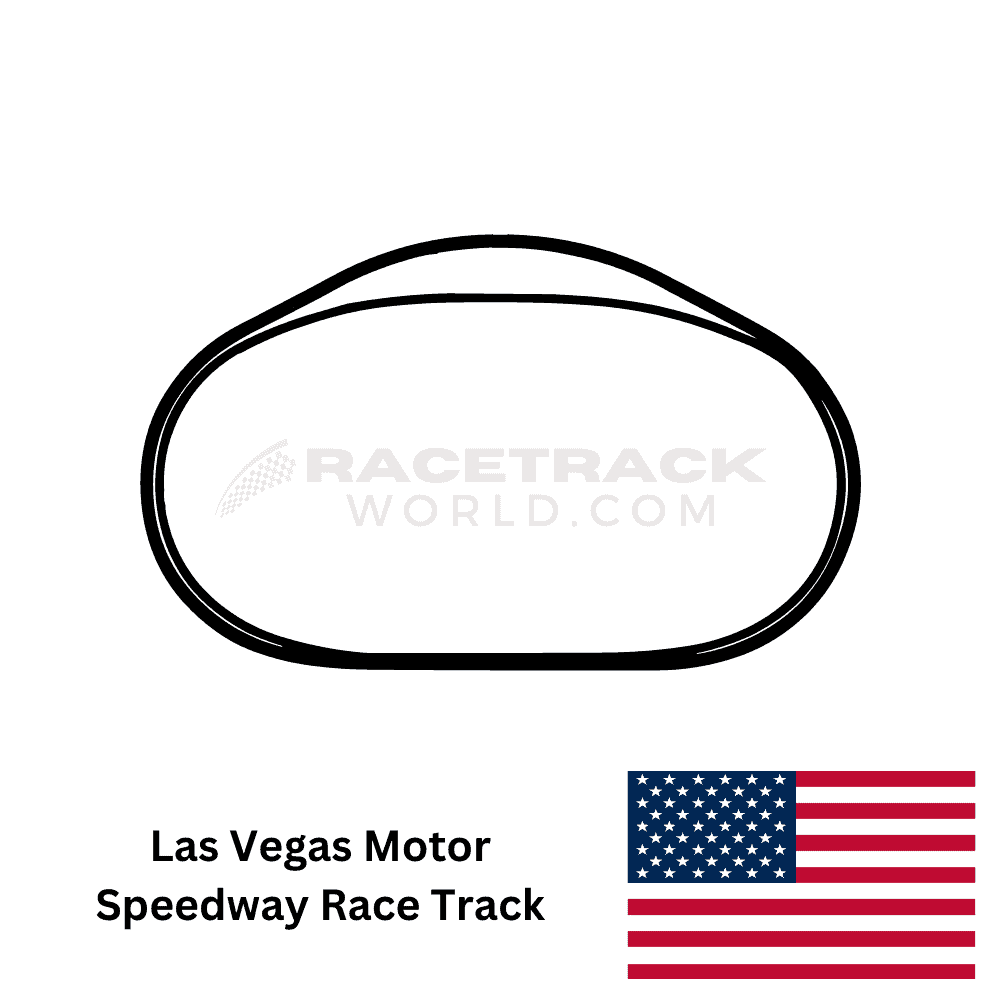
Las Vegas Motor Speedway is a 1.5-mile progressively banked tri-oval, part of NASCAR's family of 'intermediate' speedways that reward both horsepower and handling. A 2006 repaving and reconfiguration steepened the turns from 12 to 20 degrees, which widened the racing groove and made multi-lane, side-by-side racing far more common than in the track's earlier, single-groove years. Beyond the main oval, the sprawling LVMS campus also carries a shorter oval known as The Bullring, a dirt oval, a drag strip, and several configurations of an infield road course used for car-control schools and driving experiences rather than top-level competition. The wide, sweeping turns and long straights make it a favorite for drafting and late-race passing among NASCAR drivers, while the desert setting gives it dramatic mountain backdrops on TV.
Named corners and sections
- Turn 1/2. The 20-degree banked sweep leading onto the backstretch, widened in the 2006 repave to open up a second and third racing groove.
- Turn 3/4. Final corner pair before the frontstretch, where late-race passes for the lead are frequently completed.
Configurations
| Layout | Length | Used for |
|---|---|---|
| Main oval (tri-oval) | 1.5 mi | Used for all NASCAR Cup, Xfinity and Truck Series races |
| The Bullring | 0.375 mi | Short oval used for local short-track and NASCAR Whelen All-American Series racing |
| Infield road course | 2.5 mi | Multiple configurations used for driving schools and car-control experiences, not top-level competition |
Events and race weekends
Las Vegas Motor Speedway hosts two NASCAR national-series weekends a year: a spring date in March and an October weekend that is one of the 10 races in the Cup Series Chase. The O'Reilly Auto Parts Series (formerly Xfinity) races on Saturday and the Cup Series on Sunday; the Truck Series, a fixture here since 1996, is not on the 2026 Las Vegas schedule. Outside NASCAR, the speedway campus stages NHRA drag racing, motocross, and a busy calendar of car-club and manufacturer ride-and-drive events on its infield road courses.
| Event | Series | When | Notes |
|---|---|---|---|
| Pennzoil 400 | NASCAR Cup | March | Spring Cup Series weekend |
| South Point 400 | NASCAR Cup | October | Chase race (fall Cup Series weekend) |
| NASCAR O'Reilly Auto Parts Series race | NASCAR O'Reilly Auto Parts Series (formerly Xfinity) | March/October | Support race on both NASCAR weekends |
Getting there and parking
Harry Reid International Airport (LAS), serving the Las Vegas Strip, is the main gateway; the speedway sits about 17 miles north of the airport and the Strip, roughly a 30-minute drive outside heavy race-weekend traffic. The track is just off Interstate 15 at the Speedway Boulevard exit, and race weekends bring significant congestion on I-15 and surrounding surface streets.
- Harry Reid International Airport (LAS) · about 30 min drive
Parking
General parking is available on-site for most events; NASCAR race weekends draw heavy traffic on I-15 and nearby roads, so the track recommends arriving well ahead of green-flag time and allowing extra time to exit afterward.
Rideshare and shuttle options are heavily used on NASCAR weekends because of the traffic bottleneck around the single main access road; check LVMS's event traffic plan in advance.
Hotels and camping near Las Vegas Motor Speedway
Most visitors base themselves on the Las Vegas Strip or in nearby North Las Vegas, roughly 20-30 minutes from the track, and use the city's huge hotel inventory rather than staying trackside. Speedway Boulevard-area hotels near the track itself are limited, so trackside camping is the main on-site lodging option during NASCAR weekends.
Where to look
The Las Vegas Strip and Downtown Las Vegas for the widest hotel choice; North Las Vegas hotels sit closer to the speedway itself.
Camping
Trackside and infield RV camping is sold for NASCAR weekends, including a premium Inner Circle infield RV lot with added entertainment.
RV
Multiple RV lots (Inner Circle, The Strip, Motorhome Hill, Vegas Veranda and others) offer paved 20x40 to 25x60 sites with 30/50-amp power, water and sewer hookups; tent camping is not permitted.
Track days, driving experiences and lap records
The public cannot drive personal cars on the NASCAR oval, but Dream Racing Las Vegas operates a supercar driving experience on a roughly 1.2-mile road course built inside the LVMS grounds, with instructor-led sessions in exotic cars. A separate operator, Exotics Racing, runs supercar experiences nearby at SpeedVegas Motorsports Park on Las Vegas Boulevard, a related but physically separate 1.3-mile circuit rather than the speedway itself.
Who runs days here
- Dream Racing Las Vegascar
- Exotics Racing (SpeedVegas Motorsports Park, separate facility near LVMS)car
Typical cost: Supercar driving experiences from roughly $200-$400 for a few laps; no regular public HPDE program on the NASCAR oval itself
Lap records
| Category | Time | Driver | Car | Year |
|---|---|---|---|---|
| NASCAR Cup qualifying (oval) | 0:28.883 | Michael McDowell | NASCAR Cup car | 2025 |
Spectator guide
Grandstands line the frontstretch and both end turns of the tri-oval, giving most seats a view across the infield to the far side of the track as well as the frontstretch action. Turn seating puts fans closer to the high-banked corners where passing is most common.
Seating
Frontstretch grandstands overlook the start/finish line and pit road; turn 1/2 and turn 3/4 grandstands offer closer views of the banked corners.
Best places to watch
Frontstretch sections near mid-tower for full track sightlines and pit action; turn seats for fans who want to be close to the banking where side-by-side racing happens.
Bag policy
Up to two bags per person, each no larger than 18 x 18 x 14 inches; clear bags are recommended but not required. Coolers are not allowed, alcoholic drinks cannot be brought in, and glass and umbrellas are prohibited.
Weather
- Mar: Mild desert spring, highs around 70°F with cool evenings and possible wind
- Oct: Warm, highs near 80-85°F with low humidity, cooling quickly after sunset
History of Las Vegas Motor Speedway
From Speedrome to superspeedway
Las Vegas Motor Speedway traces its roots to the Las Vegas International Speedrome, a modest oval and drag strip complex that opened north of the city in 1971 under founder Richie Clyne. The site grew piecemeal through the 1970s and 1980s, but it was a major mid-1990s development push, backed by investors including Bruton Smith's Speedway Motorsports, that produced the 1.5-mile tri-oval superspeedway opened in September 1996, instantly making the property one of the largest motorsports complexes in the country.
Building a NASCAR market
The new oval quickly attracted NASCAR's national series: the Craftsman Truck Series raced there in its debut year of 1996, the Xfinity Series followed in 1997, and the Cup Series arrived in 1998, cementing Las Vegas as a fixture on the sport's western swing. Speedway Motorsports took full ownership in 1998-99 and has continued to invest in the facility, including a 2006 repave and reconfiguration that steepened banking from 12 to 20 degrees, widening the racing groove and improving the on-track product.
Tragedy and IndyCar
The track has also seen serious tragedy: a 15-car IndyCar crash on the oval in October 2011 killed driver Dan Wheldon, prompting a rethink of high-speed pack racing on 1.5-mile ovals and effectively ending IndyCar's regular visits to the venue.
Modern era
Today Las Vegas Motor Speedway hosts two NASCAR Cup Series weekends each year, including an October date that is one of the 10 races in the Cup Series Chase, alongside NHRA drag racing, motocross, and a busy program of driving-experience and manufacturer events on its infield road courses and Dream Racing circuit, making it one of the most heavily used motorsports campuses in the country outside race day itself.
Frequently asked questions
How long is Las Vegas Motor Speedway?+
The main NASCAR oval is 1.5 miles per lap, banked at 20 degrees in the turns.
When are the NASCAR races at Las Vegas Motor Speedway?+
LVMS hosts two Cup Series weekends a year: a spring date in March and a fall race in October that is part of the Cup Series Chase.
Can I drive on the track myself?+
Not on the NASCAR oval, but Dream Racing offers instructor-led supercar laps on a road course built inside the LVMS grounds.
What is the nearest airport to Las Vegas Motor Speedway?+
Harry Reid International Airport (LAS), about 17 miles and 30 minutes south of the track.
What is the seating capacity of Las Vegas Motor Speedway?+
Grandstand capacity is roughly 80,000 as of 2023.
Is there camping at Las Vegas Motor Speedway?+
Yes, paved RV and infield camping lots are sold for NASCAR race weekends; tent camping is not permitted.
Other tracks nearby
- Auto Club Speedway / California Speedway · 206 mi · oval
- Willow Springs International Raceway · 207 mi · road course
- Fox Raceway at Pala · 233 mi · motocross
- Grand Prix of Long Beach · 250 mi · street circuit
- Phoenix Raceway · 252 mi · oval
- Utah Motorsports Campus · 330 mi · road course
Facts checked against 7 sources including the official circuit website. Last reviewed 2026-09-09.