
The Evolution of the Modern Superbike
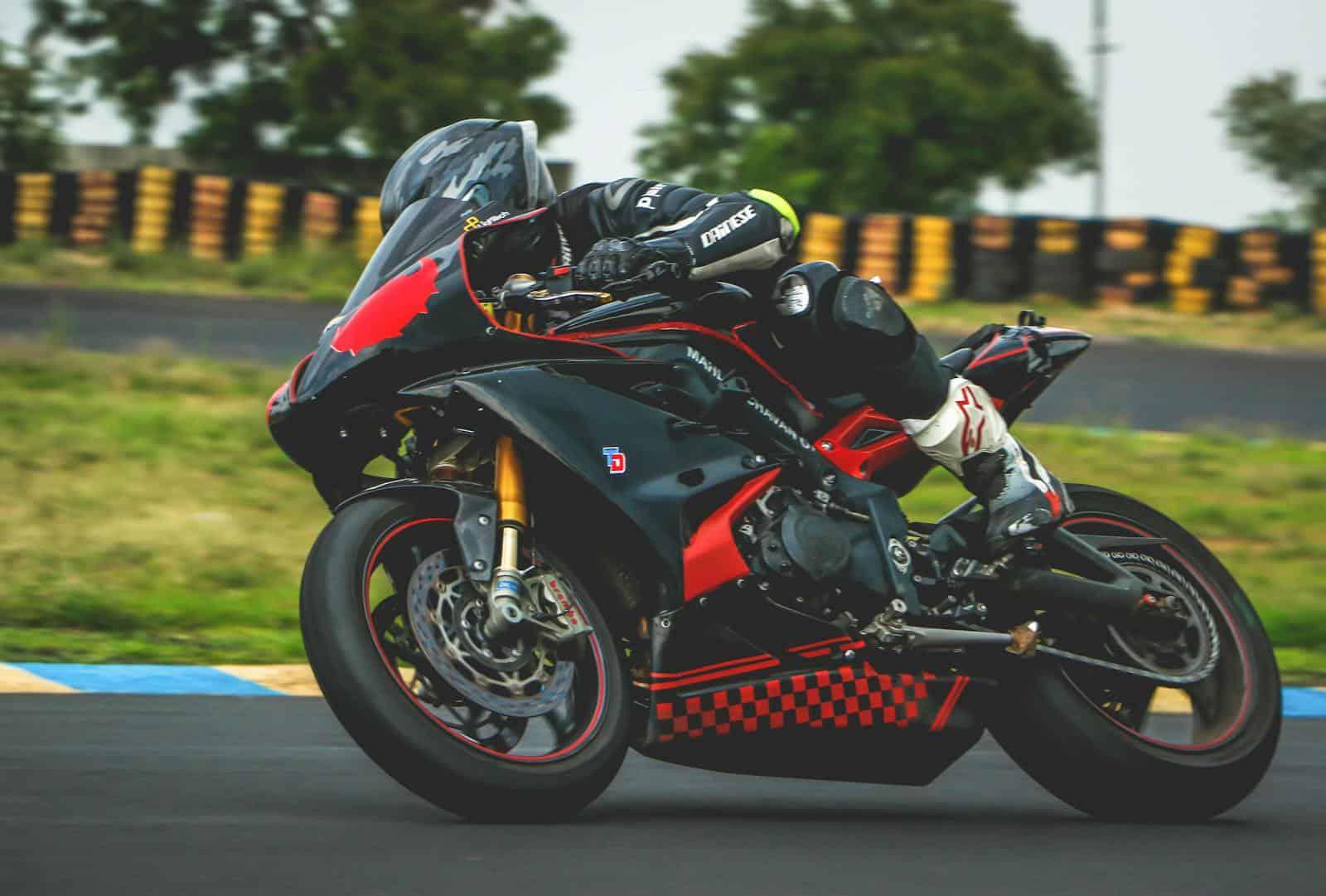
What is a Superbike?
The term “superbike” transcends a simple definition of a large-capacity motorcycle. It represents a pinnacle of engineering, a machine that, in its time, redefines the boundaries of performance, introduces new technology, and often carries a direct, undiluted lineage from the racetrack to the showroom floor. A true superbike is not merely fast; it is a statement of intent, a rolling embodiment of its manufacturer’s technological prowess and competitive ambition.
This report embarks on a chronological journey through five decades of these iconic machines, tracing their evolutionary arc and highlighting the key philosophical shifts that defined each era. The narrative begins in the 1970s, the genesis of the category, marked by a Japanese revolution that established the inline-four engine as the dominant architecture, fiercely challenged by the characterful European twins and triples. The 1980s ushered in the dawn of the “race-replica” and the homologation special, where showroom models were conceived and constructed with the singular purpose of winning on the track. This was followed by the 1990s, the zenith of analogue performance, a time when aesthetic design became as crucial as horsepower, and philosophies of lightweight handling challenged brute force.
The new millennium saw the escalation of the horsepower wars, a period in the 2000s that brought the first serious integration of electronics and the emergence of true MotoGP-for-the-road machines. Finally, the 2010s saw the digital age take complete control, with sophisticated electronic rider aids becoming essential to tame unprecedented power levels, alongside the re-emergence of radical engineering ideas like forced induction. This is the story of how the superbike evolved from a mechanical brute into a digital weapon.
The Dawn of the Superbike (1970s) – Power, Plurality, and Pucker Factor
The 1970s witnessed the birth of the superbike, a period defined by a seismic shift in the motorcycle industry. Japanese manufacturers, leveraging their mass-production capabilities, introduced a level of reliable performance that fundamentally challenged the established European and American order. This era was characterized by a celebration of brute force, mechanical honesty, and a wonderfully diverse landscape of engine configurations, from smooth inline-fours to visceral V-twins and thundering triples.
The Shot Heard ‘Round the World – The Honda CB750 (1969)
The arrival of the Honda CB750 was not just the launch of a new model; it was a paradigm shift that effectively created the modern superbike category. Developed in response to growing demand from the crucial U.S. market for a large-capacity motorcycle to rival British twins and American V-twins, Honda’s vision was to deliver sophisticated, high-performance motorcycling to the mass market. Its release forced legacy manufacturers worldwide to completely re-evaluate their engineering philosophies and production capabilities.
The CB750 brought a suite of technical features previously reserved for exotic race bikes or low-volume boutique machines. Its heart was a transversely mounted 736cc Single Overhead Camshaft (SOHC) inline-four engine, a layout Honda popularized to the point that it became the standard for the Universal Japanese Motorcycle (UJM). Designed for unprecedented smoothness and reliability, it produced a claimed 67 horsepower, a considerable figure for the time and significantly more than its British rivals.5 Perhaps its most revolutionary feature was the standard fitment of a hydraulic front disc brake, which provided stopping power that far exceeded the drum-braked competition. Combined with the convenience of an electric starter and a kill switch, the CB750 made large-capacity motorcycling accessible and dependable for a new generation of riders.
The bike’s formidable reputation was cemented on the racetrack, most notably with Dick Mann’s historic victory at the 1970 Daytona 200 aboard a CR750 race variant. This success underscored the platform’s performance potential. The earliest production models, of which only about 7,400 were made, used “sandcast” engine cases. These rough-finish cases, produced before Honda switched to high-pressure die-casting for full-scale production, are now highly collectible artifacts from the dawn of the superbike era.
Kawasaki’s Counter-Attack – The Kawasaki Z1 (1972)
If the CB750 fired the first shot, the Kawasaki Z1 was the devastating counter-barrage. Originally conceived as a 750cc machine, Kawasaki’s engineers, upon learning of Honda’s plans, went back to the drawing board. The project, codenamed “New York Steak” to signify it would be the most desirable “cut” on the motorcycle menu, was delayed to ensure it would unequivocally outperform the Honda. When it launched in 1972, the Z1 immediately seized the title of “King of the Motorcycles,” establishing Kawasaki as a premier manufacturer of high-performance machines and the new benchmark for the superbike class.
The Z1’s primary innovation lay in its engine. It was the first large-capacity Japanese four-cylinder motorcycle to utilize a Double Overhead Camshaft (DOHC) system in mass production, a feature previously seen only on expensive and rare European machines like the MV Agusta 750 S. This advanced 903cc DOHC engine produced a claimed 82 hp, a significant leap over the CB750, and propelled the Z1 to a top speed of over 130 mph, making it the fastest production bike of its era.
The Z1’s performance was immediately proven on the track, setting a 24-hour endurance world record at Daytona in 1972 and showcasing the engine’s incredible durability. This robustness became legendary, with the Z1 engine platform forming the basis of drag racing motorcycles for decades to come. The Z1’s success cemented the inline-four DOHC layout as the definitive superbike formula, and its design DNA is still celebrated in modern retro models like the Kawasaki Z900RS.
The Italian Soul – Character, Handling, and Racing Pedigree
While Japanese manufacturers focused on redefining mass-market performance with powerful and reliable inline-fours, the Italian boutique firms offered a different proposition. Their machines were born of racing passion, prioritizing chassis feedback, superior handling, and a visceral character over sheer horsepower. These bikes were often less powerful on paper but delivered a more demanding and rewarding riding experience, representing the soulful counterpoint to Japanese efficiency. The Ducati 750SS was a literal replica of the Imola 200 race winner, while the Laverda Jota was a “bruiser” that offered superior high-speed handling to its Japanese rivals. This contrast defined the central conflict in the superbike market of the 1970s: Japanese power and accessibility versus Italian soul and handling.
Ducati 750/900 Super Sport (1972/1975)
The Ducati 750SS was the embodiment of “win on Sunday, sell on Monday.” It was born directly from Paul Smart’s legendary victory at the 1972 Imola 200, making it a true race replica for the road. It featured Fabio Taglioni’s iconic 90° L-Twin engine with its signature desmodromic valve actuation, a technology that would define Ducati’s identity for the next five decades. The later 900SS, built around the 864cc “square-case” engine, continued this legacy. Its place in history was cemented by Mike Hailwood’s miraculous comeback victory at the 1978 Isle of Man TT, an event so significant that it is credited with saving the company from financial ruin and spawned a celebrated line of tribute models.
Moto Guzzi Le Mans (1976)
Named after the grueling 24-hour endurance race, the Le Mans was Moto Guzzi’s entry into the superbike wars. It was a distinctive café racer defined by its longitudinally-mounted V-twin engine, which produced a characteristic “sideways tilt” torque reaction when the throttle was blipped—a feature that gave the bike immense character. Though not the fastest bike in a straight line, its stiff frame and confident handling made it a formidable sport-tourer and a direct competitor to the BMW R90S. Its development was directly linked to the brand’s success in endurance racing, giving it a pedigree of durability and high-speed stability.
Laverda Jota (1976)
The Laverda Jota was the definitive “bruiser” of the 1970s and, for a time, the fastest production motorcycle in the world, capable of breaking the 140 mph barrier.19 It was an evolution of the Laverda 3C model, specially tuned by the British importers, the Slater Brothers, with high-performance camshafts and high-compression pistons. Its 981cc DOHC triple engine used a 180-degree crankshaft, which gave it a unique, uneven firing interval and a thundering exhaust note. While notoriously sulky and demanding at low speeds, its high-speed stability was in a different class to its Japanese competitors, whose flexible frames often struggled to contain their powerful engines.
The Two-Stroke Terrors
While four-strokes were defining the new superbike category, high-performance two-strokes offered a different, wilder, and often more terrifying kind of thrill. The Kawasaki H1 Mach III (500cc) and its larger sibling, the H2 Mach IV (750cc), were built with a simple and brutal design brief: create the fastest-accelerating motorcycles in the world. They were legendary for their explosive, “light-switch” power delivery and notoriously challenging handling, with chassis and braking technology that lagged far behind their engine output, earning them fearsome nicknames like the “Widowmaker”. In contrast, the Yamaha RD350 was a more balanced and refined package. It was a giant-killing sport bike famed for its high-revving engine and sharp, nimble handling, making it a perennial favorite of club racers and street enthusiasts alike.6
Best 1970s Superbikes
Motorcycle
Year
Engine
Key Innovation / Significance
Claimed Power (hp)
Honda CB750
1970
736cc SOHC Inline-4
First mass-market superbike; front disc brake
67
Kawasaki Z1
1972
903cc DOHC Inline-4
DOHC power king; fastest production bike
82
Ducati 750SS
1972
748cc Desmo L-Twin
Direct replica of Imola 200 race winner; Desmo valves
73
Moto Guzzi Le Mans
1976
844cc OHV V-Twin
Shaft-drive café racer with superior handling
71
Laverda Jota
1976
981cc DOHC Triple
140mph top speed; superior high-speed stability
90
Kawasaki H2 Mach IV
1972
748cc 2-Stroke Triple
Brutal acceleration; “Widowmaker” reputation
74
The Age of the Race Replica (1980s) – From Showroom to Start Line
The 1980s marked a crucial evolution in the superbike concept, shifting from the multi-purpose machines of the 1970s to highly specialized “race-replicas.” The influence of endurance racing and the newly formed World Superbike Championship became paramount, with manufacturers designing and building road-legal motorcycles for the express purpose of dominating the track. This was the decade of the homologation special, where lightweight aluminum frames, advanced suspension, and new engine configurations like the V4 trickled directly from the paddock to the pavement.
The Template for the Modern Superbike – The Suzuki GSX-R750 (1985)
The 1985 Suzuki GSX-R750 was a watershed moment in motorcycling history. It is widely considered the first true, mass-produced “race replica,” offering a level of track-focused performance to the public that had not been seen since the days of the BSA Gold Star. Suzuki’s philosophy was revolutionary; instead of focusing solely on peak power, the goal was to achieve an exceptional power-to-weight ratio. The target was a moderate 100 hp, but in a package that was 20% lighter than its 750cc contemporaries. This obsessive focus on lightweight design set the template for every sportbike that followed.37
To achieve these ambitious weight targets, Suzuki pioneered several key innovations. It was the first mass-produced street bike to feature a lightweight aluminum alloy frame (designated MR-ALBOX), with a design modeled directly on Suzuki’s works endurance racers. This provided unprecedented chassis stiffness for its weight. In the engine department, Suzuki eschewed conventional water-cooling in favor of the innovative Suzuki Advanced Cooling System (SACS), which used a high-volume flow of oil to cool the engine’s hot spots. This allowed for lighter internal components and a lighter overall engine package.36 The bike’s endurance racing origins were also evident in its distinctive “Slab-sided” or “Slabby” fairings, which became an iconic design of the era. The GSX-R750 proved its mettle immediately, achieving victories in the Isle of Man TT production class and dominating superstock championships in its debut year.
The Homologation Hero – The Honda VFR750R RC30 (1987)
The Honda VFR750R, known universally by its factory code RC30, was the epitome of the 1980s homologation special. It was, for all intents and purposes, a road-legal Grand Prix bike, produced in a limited run of just 3,000 units with the singular goal of winning the newly formed World Superbike Championship. It was astronomically expensive, exquisitely crafted, and packed with technology derived directly from Honda’s dominant RVF endurance racers.
At its heart was a high-performance, liquid-cooled 748cc V4 engine featuring gear-driven double overhead camshafts and titanium connecting rods—exotic materials and construction for a road bike at the time. This sophisticated powerplant produced around 120 hp and could propel the RC30 to speeds approaching 180 mph. The chassis was equally advanced, comprising a twin-spar aluminum frame and, most iconically, a single-sided swingarm. This feature, now a sportbike design staple, was a piece of pure race-bred technology, designed to allow for rapid rear wheel changes during grueling endurance races. The RC30 was a resounding success, fulfilling its purpose when American rider Fred Merkel won the first two World Superbike Championships in 1988 and 1989. Its combination of performance and legendary Honda reliability also made it a dominant force at the notoriously demanding Isle of Man TT.
The Birth of the Ninja – The Kawasaki GPZ900R (1984)
The Kawasaki GPZ900R was a revolutionary machine that introduced the world to the “Ninja” name and redefined the performance landscape. Launched in 1984, it debuted the world’s first 16-valve, liquid-cooled inline-four motorcycle engine, a technological leap that Kawasaki had secretly developed for six years. It immediately made headlines as the first production motorcycle to break the 150 mph barrier, a staggering achievement for the era. Its fame was catapulted into the stratosphere by its starring role as Maverick’s ride in the 1986 film
Top Gun, cementing its status as a cultural icon. The bike’s innovative design featured a compact 908cc engine mounted low in a steel frame, where it was used as a stressed member. This allowed for the elimination of traditional downtubes and a subframe, which improved handling and reduced overall weight, creating a package that was a worthy successor to the legendary Z1.
Ducati’s Four-Valve Renaissance – The Ducati 851 (1987)
The Ducati 851 marked the birth of the modern Ducati superbike and the beginning of the brand’s dynasty in World Superbike racing. Following a buyout by Cagiva, Ducati finally had the financial resources to develop an engine that could compete with the dominant Japanese inline-fours. The resulting 851, engineered by Massimo Bordi, set the technical template for every flagship Ducati that followed for decades.
The 851’s engine was a groundbreaking achievement for the small Bologna firm. It was the first Ducati V-twin to feature liquid-cooling, four-valve desmodromic cylinder heads, and electronic fuel injection—a trifecta of modern technologies that transformed the brand’s performance potential. This new 851cc engine produced 93 hp, enabling Ducati to finally challenge its rivals on power. This engineering prowess was quickly translated into racing success when Raymond Roche captured the 1990 World Superbike Championship on an 851, breaking Honda’s hold on the series and kicking off an era of Ducati dominance.
Best 1980s Superbikes
Motorcycle
Year
Engine
Key Innovation / Significance
Claimed Power (hp)
Suzuki GSX-R750
1985
749cc Oil-Cooled I-4
First mass-produced race-replica; aluminum frame
104
Honda VFR750R RC30
1987
748cc V4
Homologation special; gear-driven cams; single-sided swingarm
120
Kawasaki GPZ900R
1984
908cc 16v Liquid-Cooled I-4
First “Ninja”; first production bike over 150mph
115
Ducati 851
1987
851cc 4v Liquid-Cooled L-Twin
First modern Ducati; 4-valve heads; fuel injection
93
Yamaha FZR750R OW-01
1989
749cc 20v I-4
RC30 rival; Deltabox frame; Öhlins shock
119
Icons of Design and Analogue Thrills (1990s) – The Apex of an Era
The 1990s are often considered the golden age of the analogue superbike. It was a decade where electronic intervention was minimal, and success was defined by a sublime balance of power, lightweight design, and chassis dynamics. This was also the era where aesthetic design, led by Italian masters like Massimo Tamburini, became as crucial as outright performance, resulting in machines that were as beautiful as they were fast. The decade was marked by a philosophical battle between lightweight agility and brute force, and the peak of the “win on Sunday, sell on Monday” ethos produced some of the most exotic homologation specials ever seen.
The Supermodel – The Ducati 916 (1994)
The Ducati 916 is frequently cited as the most beautiful and influential motorcycle design of all time. Penned by the legendary Massimo Tamburini, the 916 was a masterpiece of industrial art that was also a ruthless and dominant force on the racetrack. It combined a new, more powerful water-cooled desmoquattro engine with a stunning new chassis and bodywork, completely redefining the aesthetic of a modern sportbike. Upon its debut, it was leagues ahead of its predecessor, the 888, and its design remains so timeless that it still looks modern today. The 916 brought several iconic design elements to the forefront: the sensuous single-sided swingarm, the signature under-seat exhaust system, and sharp, aggressive lines that created an unmistakable silhouette. These were not merely stylistic choices; they were functional elements derived from racing that enhanced performance and maintenance. This combination of breathtaking beauty and on-track prowess led the 916 to dominate the World Superbike Championship, solidifying Ducati’s reputation as the “two-wheel Ferrari”.
The Lightweight Revolution – The Honda CBR900RR FireBlade (1992)
The original Honda CBR900RR FireBlade was a game-changing motorcycle that fundamentally shifted the focus of the superbike class from an obsession with raw power to a new philosophy centered on lightweight design and superior handling. Developed under the leadership of Tadao Baba, the FireBlade was the embodiment of his “Total Control” concept. The result was a motorcycle with the power of a 750cc machine but the light weight and agility of a 600cc bike. While it was not the most powerful bike at its launch, its innovative lightweight construction made it a formidable weapon on both street and track, offering a level of real-world handling and flickability that its heavier, 1000cc-plus rivals could not match. The FireBlade’s 893cc inline-four engine, housed in a compact and highly rigid chassis, provided a power-to-weight ratio that set a new template for the modern superbike class.
The Homologation Exotica
The 1990s represented the peak of the “win on Sunday, sell on Monday” philosophy, a period that spurred the creation of incredibly rare, expensive, and technologically advanced homologation specials. These motorcycles were not merely up-specced road bikes; they were, in essence, detuned race bikes made legal for the road, built in limited numbers with the sole purpose of providing a competitive platform for the World Superbike Championship. This trend pushed the boundaries of technology and materials, with manufacturers utilizing titanium, magnesium, and carbon fiber to create machines that were the stuff of dreams for most enthusiasts.
Honda RVF750R RC45 (1994)
The RC45 was the highly anticipated and astronomically expensive successor to the all-conquering RC30. As a pure V4-powered homologation special, only 200 units were ever made available to the public, making it exceptionally rare. It was packed with Honda Racing Corporation (HRC) technology, including gear-driven cams, titanium connecting rods, and an advanced PGM-FI fuel injection system. While it didn’t quite achieve the same level of consistent World Superbike dominance as its predecessor, its extreme rarity, exquisite build quality, and direct lineage to HRC make it a holy-grail collector’s bike today.
Yamaha YZF-R7 OW02 (1999)
The Yamaha YZF-R7, known by its factory code OW02, was the company’s direct answer to the Honda RC45 and the Ducati 916. It was a pure homologation special, with only 500 units built to satisfy World Superbike rules. The OW02 was a “factory race bike straight from the box,” featuring a high-quality aluminum Deltabox frame, top-shelf Öhlins rear suspension, and exotic materials like titanium and magnesium. Its high-revving 749cc inline-four engine was notable for its use of Yamaha’s signature five-valve-per-cylinder technology. Although it never secured a World Superbike championship title, its uncompromising race-focused design and extreme rarity have made it a highly sought-after collector’s item.
The Ultimate Underdog – The Britten V1000 (1991)
The story of the Britten V1000 is perhaps the most incredible in superbike history. Designed and hand-built by John Britten and a small team of friends in a modest workshop in Christchurch, New Zealand, the V1000 was a masterpiece of innovation that took on and defeated the world’s largest manufacturers. The bike was radically advanced for its time, featuring a frameless chassis that used its 999cc V-twin engine as a stressed member, extensive use of carbon fiber for the bodywork, wheels, and a unique double wishbone girder front suspension. Other innovations included an under-seat radiator for improved aerodynamics and a programmable engine management system with data logging—all in the early 1990s. Only 10 Brittens were ever built, yet they achieved legendary success in Battle of the Twins racing and set multiple world speed records, cementing their place in motorcycling folklore.
The Contenders – The Kawasaki ZX-9R and the Dawn of the R1
The Kawasaki ZX-9R was the brand’s primary competitor to the Honda FireBlade. It was an extremely capable and powerful machine, often praised for being more comfortable and road-focused than its rivals. However, this road-friendliness came at the cost of it being slightly heavier and perceived as less sharp than the purest track weapons of the era, which often left it in the shadow of more radical competition like the FireBlade and the later R1.
Launched at the very end of the decade in 1998, the Yamaha YZF-R1 was a revelation on the same scale as the original FireBlade. Its most significant innovation was the world’s first “vertically stacked gearbox,” a design that made the engine incredibly compact. This allowed Yamaha’s engineers to use a long swingarm for excellent traction while maintaining a short, agile wheelbase. The result was a package with a claimed 150 hp and a dry weight of just 177 kg, a power-to-weight ratio that completely reset the benchmark for the superbike class and sent competitors scrambling.
Best 1990s Superbikes
Motorcycle
Year
Engine
Key Innovation / Significance
Claimed Power (hp)
Ducati 916
1994
916cc 4v Liquid-Cooled L-Twin
Iconic Tamburini design; underseat exhaust; WSBK dominance
114
Honda CBR900RR
1992
893cc 16v Liquid-Cooled I-4
“Total Control” philosophy; lightweight focus over raw power
122
Honda RC45
1994
749cc 16v V4
RC30 successor; PGM-FI fuel injection; ultra-rare
119
Kawasaki ZX-9R
1994
899cc 16v Liquid-Cooled I-4
Powerful and comfortable road-focused superbike
139
Yamaha YZF-R1
1998
998cc 20v Liquid-Cooled I-4
Vertically stacked gearbox; class-redefining power-to-weight
150
Britten V1000
1991
999cc 8v V-Twin
Hand-built masterpiece; carbon chassis/wheels; girder fork
166
The Horsepower Wars and the Digital Dawn (2000s) – The 200hp Barrier
The 2000s were defined by an unabashed and escalating pursuit of horsepower. Manufacturers, particularly the Japanese “Big Four,” engaged in a technological arms race to dominate the liter-bike class, relentlessly pushing engine performance toward the 200 hp barrier. This decade also marked the first meaningful integration of electronic rider aids derived from MotoGP, such as ride-by-wire throttles and rudimentary traction control, signaling the beginning of the end for the purely analogue superbike and paving the way for the digitally managed machines of the future.
The Reign of the Gixxer – The Suzuki GSX-R1000
Suzuki entered the new millennium as the undisputed king of the superbike class, dominating the early-to-mid 2000s with its GSX-R1000. The first generation, known as the “K1” (2001), masterfully combined the lightweight chassis philosophy of the beloved GSX-R750 with a powerful new 998cc engine.91 The result was a machine that produced 160 hp with a top speed approaching 190 mph, creating a package that was both immensely powerful and brilliantly agile. It was an instant class leader, earning
Cycle World‘s prestigious “Best Superbike” award for three consecutive years from 2001 to 2003. The platform’s evolution continued, with the K5/K6 generation (2005-2006) often cited by enthusiasts and journalists as one of the greatest superbikes ever made—a near-perfect balance of raw power and intuitive handling at the apex of the analogue era, just before complex electronics became prevalent.
The Liter-Bike Arms Race
The dominance of the early GSX-R1000 prompted a fierce response from its Japanese rivals, sparking a technological arms race that defined the decade. This was not a period of incremental updates; it was a technological war fought with innovations trickling directly down from the highest level of motorsport. Kawasaki’s 2004 ZX-10R was a raw, untamed “monster” built specifically to “wrestle the crown away” from Suzuki. Honda’s 2004 CBR1000RR was a complete redesign, leveraging technology and design philosophy directly from its all-conquering RC211V MotoGP bike.96 Yamaha, not to be outdone, introduced the revolutionary crossplane crankshaft on its 2009 R1, another piece of MotoGP technology that gave its bike a unique power delivery and sound. This intense competition resulted in a golden era of distinct, characterful, and astonishingly powerful liter-bikes.
Kawasaki ZX-10R (2004)
The 2004 Kawasaki ZX-10R was a brutal and effective answer to the GSX-R1000’s supremacy. It replaced the aging ZX-9R with a machine that was lighter, sleeker, and packed a “boatload of power to scare anyone”. With a claimed 175 hp (155 at the rear wheel) and a wet weight of just over 400 pounds, it was a “benchracing and real-world king,” praised for its aggressive nature and raw performance. Its dominance was confirmed when it captured Cycle World‘s “Best Superbike” title in both 2004 and 2005, ending the GSX-R’s reign.
Honda CBR1000RR (2004)
The 2004 CBR1000RR represented a complete philosophical shift for the Fireblade line. It was heavily inspired by Honda’s dominant RC211V MotoGP machine, adopting its “mass centralization” ethos. This new model introduced MotoGP-derived technologies to the street, most notably the Unit Pro-Link rear suspension and a distinctive center-up exhaust system, both designed to concentrate mass and improve handling. Its new 998cc engine featured Programmed Dual Sequential Fuel Injection (PGM-DSFI) for enhanced power and throttle response. The evolution continued with the 2008 model, which featured a cleaner under-slung exhaust and, significantly, the world’s first electronically controlled combined ABS system specifically designed for a superbike, a major step in rider safety technology.
Yamaha YZF-R1 (2002-2009)
The Yamaha YZF-R1 underwent significant evolution throughout the 2000s. The 2002 model introduced fuel injection and a new, more rigid Deltabox frame. The stunningly redesigned 2004 model featured fashionable underseat exhausts and was the first liter-bike to claim the magic 1:1 power-to-weight ratio, with a claimed 172 hp and a 172 kg dry weight. The 2007 model brought further technological advancement with the introduction of a ride-by-wire throttle (YCC-T) and variable-length intake funnels (YCC-I), both derived from racing. However, the most significant leap came with the 2009 model. It debuted the revolutionary crossplane crankshaft engine, a direct piece of MotoGP technology. This gave the R1 an uneven firing order, resulting in a unique V8-like sound and, more importantly, exceptional traction and cornering performance that set it apart from its rivals.
Italian Evolution and Exotica – Ducati 999 (2003) & 1098 (2007)
The Ducati 999, launched in 2003, was the controversial successor to the iconic 916. Designed by Pierre Terblanche, its stacked-headlight design was polarizing and a radical departure from its predecessor. However, from a performance standpoint, it was a superior machine in every way: more comfortable, faster, and with better handling. Over time, opinions on its unique styling have softened, and it is now appreciated for its technical merits and distinctive look.
In 2007, Ducati responded to the market’s desire for classic beauty with the 1098. This model was a triumphant return to the aesthetic principles of the 916, featuring a single-sided swingarm and aggressive, flowing lines, but it was coupled with a massive leap in performance. Its new 1099cc Testastretta Evoluzione engine produced a monstrous 160 hp, making it the most powerful twin-cylinder production engine ever at the time. The 1098 was an instant success, both commercially and on the track, where Troy Bayliss piloted the 1098 F08 to the 2008 World Superbike title.
Ducati Desmosedici RR (2007)
The Ducati Desmosedici RR stands as the ultimate road bike of the 2000s and the first true MotoGP replica offered to the public. Produced in a limited run of just 1,500 units, it was a detuned version of Ducati’s Desmosedici GP6 race bike. It featured a fire-breathing 989cc Desmodromic V4 engine that produced a claimed 200 hp, housed in a signature steel trellis frame and equipped with the absolute best components available, including Öhlins gas-pressurized forks, Brembo monobloc calipers, and Marchesini forged magnesium wheels. This was not a motorcycle inspired by racing; it was a race bike with lights, offering an uncompromising, professional-level riding experience that was incredibly stiff and demanding, rewarding only the most skilled riders.
Best 2000s Superbikes
Motorcycle
Year
Engine
Key Innovation / Significance
Claimed Power (hp)
Suzuki GSX-R1000 (K1)
2001
998cc Liquid-Cooled I-4
Set new benchmark for power and handling
160
Honda CBR1000RR
2004
998cc Liquid-Cooled I-4
MotoGP-derived tech (Unit Pro-Link, HESD)
170
Kawasaki ZX-10R
2004
998cc Liquid-Cooled I-4
Raw power, lightweight chassis, class leader
175
Yamaha YZF-R1
2009
998cc Liquid-Cooled I-4
MotoGP-derived crossplane crankshaft
182
Ducati 1098
2007
1099cc Liquid-Cooled L-Twin
Return to form, 160hp V-twin
160
Ducati Desmosedici RR
2007
989cc Liquid-Cooled V4
First true road-legal MotoGP replica
200
The Electronic Age and the Hyperbike (2010s) – Taming the Beast
The 2010s marked the full-scale arrival of the digital age in motorcycling. Sophisticated electronic rider aids, including lean-angle-sensitive traction control, wheelie control, and advanced ABS, transitioned from exotic options to standard equipment. This digital revolution was essential to make previously unimaginable horsepower levels manageable for mere mortals. The decade also saw the return of radical engineering concepts, most notably forced induction, giving birth to the new “hyperbike” category and once again pushing the boundaries of performance.
The German Game-Changer – The BMW S1000RR (2010)
In 2010, the BMW S1000RR was a “killer-blow” to the established superbike order. At a time when Japanese development had slowed in the wake of the global financial crisis, BMW—a brand with virtually no superbike heritage—unleashed a machine that was significantly more powerful and possessed a far more advanced electronics package than anything else on the market. It completely “re-wrote the sportsbike rulebook,” forcing the entire industry to accelerate its adoption of sophisticated electronics to remain competitive.
The S1000RR’s 193 hp inline-four engine was class-leading, but its true innovation was its electronics suite. It was the first mass-produced superbike to offer optional, highly sophisticated Race ABS and Dynamic Traction Control (DTC) that were lean-angle sensitive. Using an under-seat gyroscope, the system could modulate braking and throttle intervention based on the bike’s lean angle, a massive leap in rider safety and performance. It also offered multiple riding modes and an optional quick-shifter, features that were revolutionary at the time but have since become industry standards. The S1000RR’s arrival proved that extreme power could be made accessible and reliable, and it instantly dominated group tests and sales charts.
The Return of Forced Induction – The Kawasaki Ninja H2 & H2R (2015)
The Kawasaki Ninja H2 and its track-only counterpart, the H2R, were a stunning declaration of engineering prowess from Kawasaki Heavy Industries. Unveiled in 2015, these machines were a corporate-wide project, combining technology from Kawasaki’s aerospace and gas turbine divisions to create something truly unique. They reintroduced forced induction to mainstream motorcycling with a centrifugal-type supercharger designed and built entirely in-house. The track-only H2R, with a claimed 310 hp, became the most powerful production motorcycle ever made, single-handedly creating the “hyperbike” category and shattering perceptions of what was possible.
The technical innovations were extensive. The 998cc inline-four engine was paired with a supercharger that allowed for massive power without the need for a bulky and heavy intercooler. To handle the extreme speeds, a steel trellis frame was chosen over a typical aluminum beam frame for its specific flex characteristics, which provided greater stability. The H2R also featured extensive carbon fiber aerodynamic winglets, developed using computational fluid dynamics (CFD) analysis, to generate downforce and prevent lift at speeds well over 200 mph. The street-legal H2 offered a more manageable 200+ hp but retained the supercharged character and radical styling of its track-only sibling.
The V4 Revolution – Ducati Panigale V4 (2018) & Aprilia RSV4
The 2010s saw the V4 engine, once an exotic niche, become a mainstream superbike powerhouse, led by two Italian rivals. This marked a significant engineering shift away from the V-twin, particularly for Ducati, which had built its entire modern superbike identity on that engine configuration. Aprilia had been successfully campaigning and refining its 65° V4 since the RSV4’s launch in 2009, proving the platform’s competitiveness with multiple World Superbike titles. Ducati, after pushing its V-twin to its absolute engineering limit with the 1299 Panigale, made the monumental decision to switch to a V4 for its flagship superbike. The resulting Panigale V4, launched in 2018, was a direct result of lessons learned in MotoGP, where V4s had become the dominant engine layout. The concurrent success of these two Italian V4s solidified the engine configuration as a formidable and desirable alternative to the traditional inline-four.
Aprilia RSV4
Launched in 2009 and continuously refined throughout the 2010s, the Aprilia RSV4 was a highly advanced machine from its inception. It featured a compact 65° V4 engine, a highly adjustable race-derived chassis, and was an early adopter of a full suite of sophisticated electronics known as Aprilia Performance Ride Control (APRC). This system included ride-by-wire, launch control, and an Inertial Measurement Unit (IMU) to manage traction and wheelie control, making it one of the most technologically advanced bikes of its time. It was a consistent front-runner in magazine group tests and a multiple-time champion in the World Superbike Championship.
Ducati Panigale V4 (2018)
The Panigale V4 represented a historic and monumental shift for Ducati, moving away from the V-twin that had defined its superbikes for generations. It debuted the 1,103cc Desmosedici Stradale engine, a direct descendant of the brand’s MotoGP motor. This engine brought groundbreaking technology to the street, most notably a counter-rotating crankshaft, which spins in the opposite direction of the wheels to counteract gyroscopic forces, making the bike easier to turn and more stable under acceleration. The Panigale V4 set a new benchmark for production horsepower with over 214 hp and came equipped with a state-of-the-art electronics package and, on the V4 R homologation special, advanced aerodynamic winglets derived from MotoGP.
The Apex Predator Refined – The Yamaha YZF-R1/R1M (2015)
The 2015 Yamaha YZF-R1 was a complete and radical redesign, marking a shift from a capable road bike to a machine developed with an uncompromising focus on the racetrack. Its development was heavily inspired by Valentino Rossi’s YZR-M1 MotoGP bike, and it brought an unprecedented level of race-derived technology to the public. It featured a refined version of the signature crossplane crankshaft engine, but its most significant advancement was its electronics package. The 2015 R1 was one of the first production bikes to feature a six-axis Inertial Measurement Unit (IMU), which provided a comprehensive suite of MotoGP-level rider aids, including lean-sensitive traction control, slide control, anti-wheelie (lift) control, and launch control. The limited-edition R1M took this a step further, adding Öhlins Electronic Racing Suspension and carbon fiber bodywork, creating a true track-day weapon available directly from the showroom floor.
Best 2010s Superbikes
Motorcycle
Year
Engine
Key Innovation / Significance
Claimed Power (hp)
BMW S1000RR
2010
999cc Liquid-Cooled I-4
Game-changing electronics (DTC, Race ABS)
193
Kawasaki Ninja H2
2015
998cc Supercharged I-4
First modern supercharged superbike
200+
Aprilia RSV4
2009
999cc 65° V4
Early adopter of advanced electronics (APRC), WSBK champion
180
Yamaha YZF-R1M
2015
998cc Crossplane I-4
MotoGP-derived electronics with 6-axis IMU
200
Ducati Panigale V4
2018
1103cc 90° V4
Shift from V-twin; counter-rotating crankshaft
214
From Analogue Brutes to Digital Weapons
The five-decade journey of the superbike is a remarkable story of relentless technological advancement and shifting design philosophies. It began in the 1970s with analogue brutes like the Honda CB750 and Kawasaki Z1, which established a simple but potent formula: a big engine in a basic frame, delivering unprecedented power to the masses. This era was defined by mechanical honesty, where performance was a direct result of displacement and engineering muscle, challenged only by the soulful, handling-focused machines from Italy.
The 1980s saw this formula specialize. The racetrack became the primary driver of innovation, giving birth to the race-replica and the homologation special. Bikes like the Suzuki GSX-R750 and Honda VFR750R RC30 were no longer all-rounders; they were purpose-built weapons, bringing aluminum frames, V4 engines, and other track-derived technologies to the street in the pursuit of checkered flags. This trend reached its analogue zenith in the 1990s, a golden age where machines like the Ducati 916 and Honda CBR900RR demonstrated that sublime handling, lightweight design, and breathtaking aesthetics were as important as raw power.
The new millennium ushered in an unbridled horsepower war, with the 200hp barrier being relentlessly pursued. The 2000s were defined by the dominance of bikes like the Suzuki GSX-R1000 and the introduction of MotoGP technology to the public, culminating in the ultimate expression of analogue performance: the Ducati Desmosedici RR. This escalation of power necessitated a new solution, which arrived in full force in the 2010s. The BMW S1000RR heralded the digital age, its sophisticated electronics making staggering horsepower levels manageable and safe. This decade saw the V4 engine rise to prominence and radical ideas like supercharging return with the Kawasaki Ninja H2, creating a new “hyperbike” class.
The definition of a superbike has evolved dramatically—from the 67-horsepower CB750 to the 214-horsepower, electronically-managed Panigale V4. Yet, the core mission has remained constant: to deliver the ultimate expression of two-wheeled performance, to push the boundaries of technology, and to bring the thrill of the racetrack to the open road. The icons of these five decades have not only defined their respective eras but have also fundamentally shaped the technology, safety, and performance of every motorcycle we ride today. They are a testament to a relentless pursuit of speed, control, and the pure excitement of motorcycling at its absolute limit.