
Autódromo Internacional de Luanda
Autódromo Internacional de Luanda at a glance
- Location
- Luanda
- Type
- road course
- Length
- 4.377 km (2.72 mi)
- Turns
- 8
- Surface
- asphalt
- Opened
- 1972
- Owner
- private ownership (Laurinda Hoygaard, as of 2014)
Track map and layout
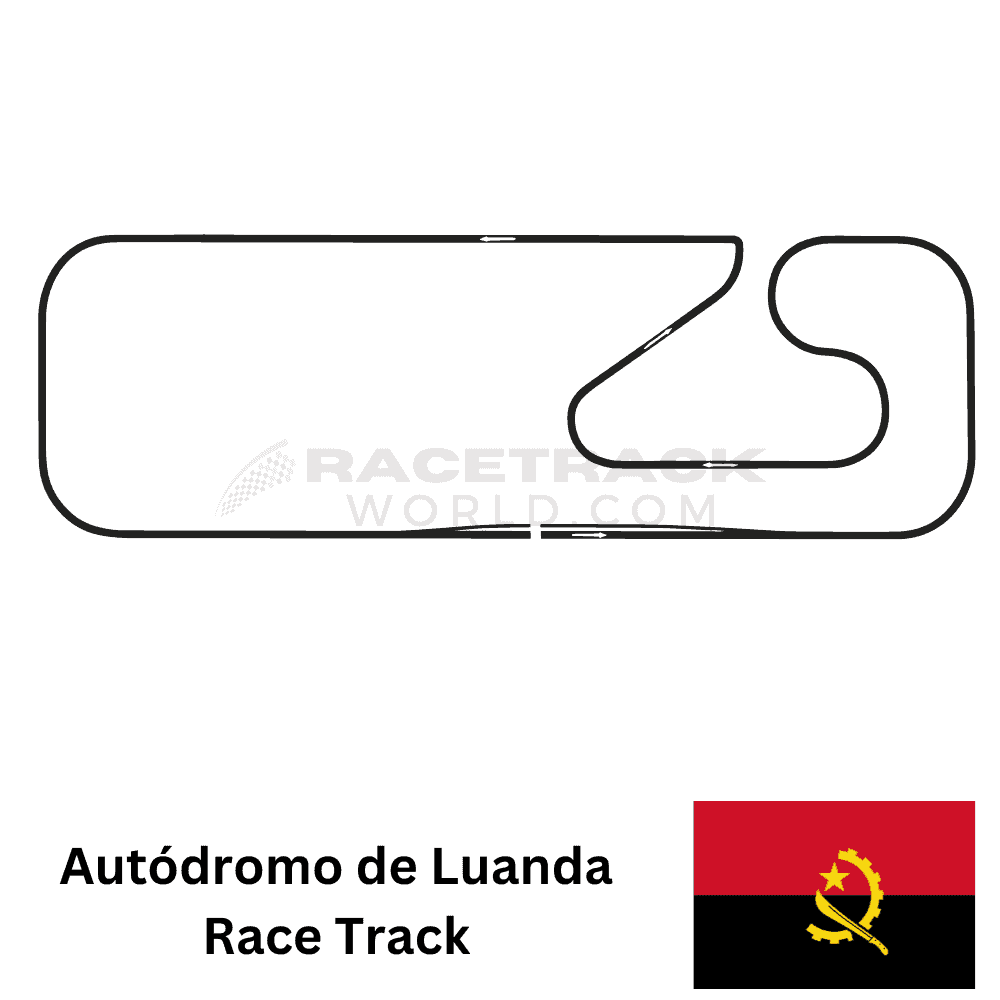
The Luanda circuit sits in the Belas district about 25 km southwest of the city centre, near Mussulo Bay. When it opened in 1972 it was built with an Indianapolis-style oval alongside a multi-configuration road course, and was noted at the time for advanced features including an electronic marshalling system and what is reported to be the world's first use of gravel traps. Today's full road-course configuration runs 4.377 km with 8 turns; the venue historically offered five layouts ranging from 3.208 km up to 6.280 km, though not all remain in regular use after the long civil-war closure.
Configurations
| Layout | Length | Used for |
|---|---|---|
| Full circuit (2000-present) | 4.38 km | 4.377 km, 8 turns |
Events and race weekends
Racing resumed at the circuit from around the 2000s after roughly 25 years of inactivity caused by the Angolan civil war, and events are now organised by Angola's motorsport federation, FADM (Federação Angolana de Desportos Motorizados). The venue hosts national circuit-racing and karting championships rather than international series, reflecting its role as Angola's principal permanent motorsport facility.
Getting there and parking
The circuit is roughly 25 km southwest of central Luanda in the Belas district. Quatro de Fevereiro Airport serves the capital with domestic and some international flights; from there, visitors typically travel to the circuit by taxi or hired car, as there is no dedicated public transport route to the venue.
- Quatro de Fevereiro Airport (LAD) · about 40 min drive
Confirm event access and any required permits in advance through the Angolan motorsport federation (FADM), as the circuit does not run a year-round public visitor programme.
Hotels and camping near Autódromo Internacional de Luanda
Visitors typically stay in central Luanda, which has the country's widest range of international and business hotels, roughly 30-40 minutes from the circuit by road. There is no camping or trackside accommodation at the venue.
Where to look
Central Luanda and the Ilha de Luanda peninsula, both with the city's main hotel options and roughly 30-40 minutes from the Belas circuit.
Track days, driving experiences and lap records
There is no standing public track-day operator at the circuit; access for driving is generally limited to national championship competitors, karting events and occasional manufacturer or club activity organised through FADM.
Spectator guide
As Angola's main permanent circuit, the venue hosts national racing and karting rounds with general spectator viewing around the road-course layout rather than large dedicated grandstands comparable to major international circuits.
Weather
- Jun-Sep (dry season, 'cacimbo'): cooler and drier, highs around 24-26°C with frequent coastal haze
- Nov-Apr (wet season): hot and humid with periodic heavy rain
History of Autódromo Internacional de Luanda
A showcase circuit for late-colonial Angola
The Autódromo Internacional de Luanda opened on 28 May 1972 in the Belas district southwest of the capital, near Mussulo Bay. At the time it was hailed as one of the most sophisticated circuits of its type anywhere, combining an Indianapolis-style oval with a flexible, multi-configuration road course. It featured advanced-for-its-era technology including an electronic marshalling system, and it is credited as the first circuit in the world to use gravel traps, an innovation that would later become standard safety practice at circuits worldwide. Sports car racing opened the venue, with Hélder de Sousa winning in a Ford Capri, and the circuit hosted the 3 Hours of Luanda during its brief early operational period.
Three decades of silence
The circuit's promise was cut short almost immediately. Angola's war of independence gave way to a long civil war beginning in 1975, and organised motorsport at Luanda halted entirely for roughly 30 years as the country endured sustained conflict. The facility fell into disuse during this period, a stark contrast to the ambitions of its 1972 opening.
Revival under private ownership
With the end of Angola's civil war in 2002, efforts to restore Luanda's motorsport scene gathered pace through the 2000s, and the circuit came back into use under private ownership. Racing and karting events resumed, now organised through Angola's motorsport federation, FADM. The revived circuit today runs a 4.377 km, 8-turn full configuration and continues to serve as the country's principal permanent venue for organised motor racing, a much-reduced but still active successor to its ambitious 1970s origins.
Frequently asked questions
How long is the Autódromo de Luanda?+
The current full circuit configuration is 4.377 km (2.720 miles) with 8 turns; the original 1970s facility offered several longer layouts up to 6.280 km.
Why did the circuit stop hosting races for so long?+
The Angolan civil war, which began shortly after the circuit opened in 1972 and lasted until 2002, halted organised motorsport at the venue for roughly three decades.
Is the circuit active today?+
Yes. Racing resumed from around the 2000s under private ownership, and national circuit and karting events are now organised through Angola's motorsport federation, FADM.
Did the original circuit have an oval track?+
Yes, the 1972 facility included an Indianapolis-style oval alongside its road-course layouts, an unusual combination for a circuit of that era outside the United States.
How do I get to the circuit from Luanda?+
It's in the Belas district about 25 km southwest of central Luanda, roughly a 40-minute drive; there is no dedicated public transport route, so most visitors use a taxi or hired car.
Other tracks nearby
- Autódromo Internacional de Benguela · 401 km · historic circuit (defunct)
Facts checked against 3 sources including the official circuit website. Last reviewed 2026-09-11.