
Honda CB750 Review
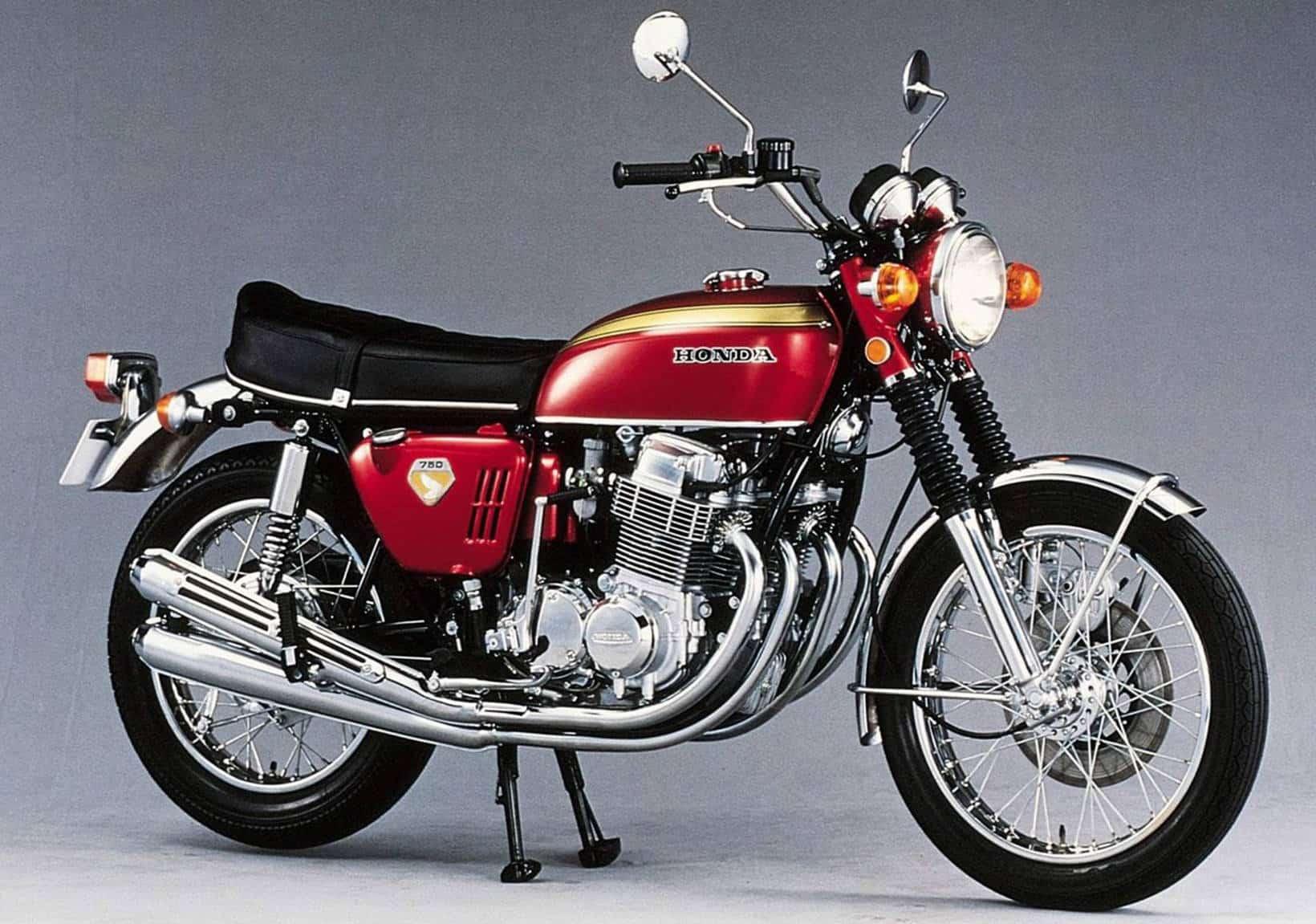
When you think of the the Honda CB750. You might look at this and think, “Oh, another old Japanese motorcycle. Probably smells of mothballs and disappointment.” And you’d be wrong. Utterly, catastrophically, and seismically wrong. This isn’t just a motorcycle; this, ladies and gentlemen, is the motorcycle. The one that sent the entire British motorcycle industry into a terminal decline, a bit like a startled pheasant flying into a turbine.
Before this machine appeared in 1969, the world of big bikes was dominated by hulking, vibrating British twins from the likes of Triumph and BSA. They were… characterful. Which is a polite way of saying they leaked oil, shook themselves to bits, and required the sort of determined kickstart that could put your leg in a different postcode. Then Honda, a company known for making polite little runabouts, unleashed this four-cylinder bombshell.
It wasn’t just the engine, with its four cylinders and single overhead camshaft, that was revolutionary. It was the whole package. It had an electric starter. An electric starter! While British bike owners were performing a ritualistic rain dance on a kickstart lever, the Honda owner simply pressed a button.It was like comparing a carrier pigeon to email. And it had a front disc brake, a feature previously found only on exotic race bikes. This meant it actually stopped, which was a novel and frankly brilliant idea.
Cycle World magazine, in a moment of staggering understatement, called it “a masterpiece.” It could top 120 miles per hour, which in 1969 was basically warp speed, and it did so with a smoothness that was utterly alien to anyone who had ever ridden a British twin. It was so advanced, so comprehensively better than anything else, that a new word had to be invented to describe it: “superbike.”
And the price! When it was launched in the US, it cost a mere $1,495. To put that in perspective, big bikes at the time were selling for between $2,800 and $4,000. At the Las Vegas dealer meeting, when the price was announced, the 2,000 dealers in attendance apparently erupted in “thunderous applause.” I imagine it was the sound of 2,000 people simultaneously realizing they were about to become very, very rich.
Of course, it wasn’t perfect. The chassis, by modern standards, is a bit… wobbly. The 218kg dry weight and 67 horsepower taxed the mild steel frame and Showa suspension to their absolute limits. The front forks were a bit weedy, and the rear shocks, while looking splendid in their chrome covers, were more for show than go. And the tires were made of a substance that seemed to have all the grip of a well-oiled eel.
But that’s like criticizing a Spitfire for not having air conditioning. It’s missing the point. This motorcycle changed everything. It was so successful that it created a whole new category in Japan known as “Nanahan,” or “seven-and-a-half,” for 750cc bikes. It even went on to win the Daytona 200 in 1970, cementing its reputation as a performance machine.
Over the years, the CB750 evolved. In 1979, the CB750F arrived with a more powerful DOHC engine, and later came the CB900 and the mighty CB1100. There was even a “Hondamatic” version with a two-speed semi-automatic transmission, which was a bit like putting a muzzle on a lion. And let’s not forget the Nighthawk 750, a later, more cruiser-style version that was produced for many years.
But it’s the original, the 1969 CB750, that will forever be remembered as the bike that changed the world. It was a technical tour de force, a masterpiece of engineering, and a shot across the bows of the established motorcycle order. It was, and still is, a legend. And if you ever get the chance to ride one, you’ll understand why. It’s not just a motorcycle; it’s a piece of history. A fast, reliable, and utterly brilliant piece of history. And on that bombshell, it’s time to end.