
HONDA RC45 Review
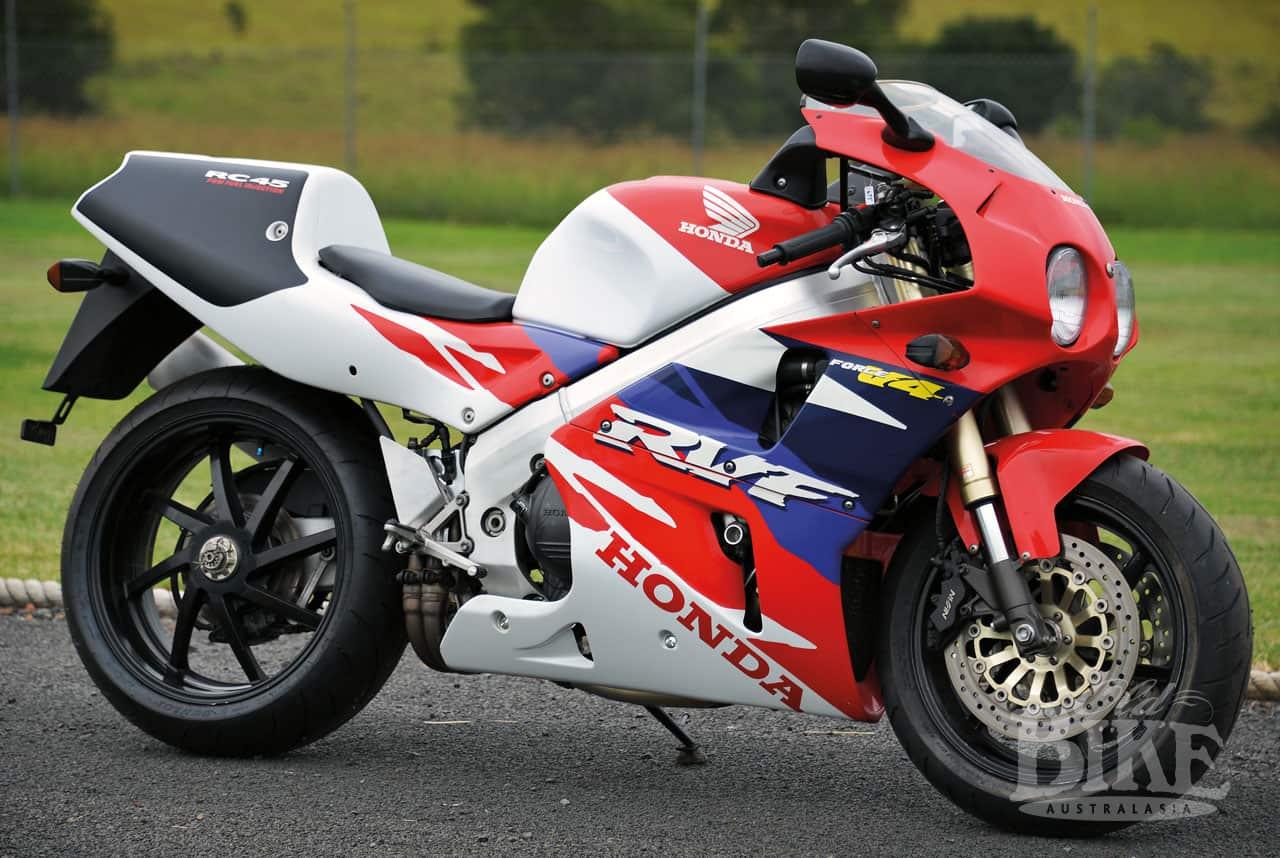
Right, let’s get one thing straight. The 1990s. If you think it was all about Britpop and questionable shell suits, you’re an idiot. It was, in fact, a golden age. A time when men were men, and superbikes were utterly, biblically, brilliant. It was a glorious, high-octane war, with Kawasaki, Yamaha, and Suzuki throwing everything they had at the problem.
But amidst the smoke and fury, two machines stood head and shoulders above the rest. One was the Ducati 916. A stunningly beautiful thing, I’ll grant you. Designed by a man with a name like a fancy dessert, Massimo Tamburini. It was the supermodel of the paddock – all cheekbones and drama. The other… well, the other was the Castrol Honda RC45. And that was the SAS soldier. Less flash, more… menace.
The battles between Carl Fogarty on his Italian supermodel and Aaron Slight on his Japanese weapon are the stuff of legend. And while the Ducati got all the lingering camera shots, the Honda had something else. An aura. The quiet confidence of a thing that knows it’s properly, brilliantly, engineered.
Was The Honda RC45 Everyman’s Factory Superbike? Don’t Be Daft.
The Honda RVF750R RC45. You have to say the whole thing, it’s the law. It arrived in 1994 not so much as a successor to the RC30, but as a statement of intent. It was a “homologation special,” which is a fancy way of saying, “We’ve built this road bike for the sole, glorious purpose of winning races, and we’ve only made just enough to keep the rule-makers happy.”
And when I say “just enough,” I mean it. They built a paltry 200 of them. In the entire world. The Americans got 50, probably to shut them up. This wasn’t a motorcycle; it was a unicorn with a V4 engine. Finding one today is harder than finding a modest person on Instagram.
What made it so special was the sort of technological witchcraft usually reserved for top-secret military projects. It was one of the first Hondas with PGM-FI fuel injection, a dark art they’d learned from the utterly bonkers, oval-pistoned NR750. And at its heart was the V4. A 749cc, 90-degree masterpiece with gear-driven cams. This wasn’t some chain-flapping afterthought; this was engineering with the precision of a Swiss watchmaker who’d been told to make something that could survive a nuclear blast. The result was a deep, droning roar that became the definitive sound of 90s superbike racing. It didn’t clatter like some of its European rivals; it bellowed.
Its DNA was pure endurance racer. Park it next to a modern superbike, say a new Fireblade, and the RC45 looks enormous. Imposing. The front end is as vast and purposeful as an aircraft carrier’s bow, dominated by those bug-eyed headlamps. The new bike looks like a frightened whippet in comparison.
Glorious Victory for the RC45 and a Sobering Problem
So, you have this all-conquering, race-bred weapon, forged in the heart of Honda’s racing division. It’s destined for greatness. But… there was a problem. A rather significant one, actually. The standard bike, the one you could actually buy, was… well, it was a bit asthmatic.
The American version produced a wheezy 101 horsepower. You could get more power from shouting at it. The European one was better at 118, but against the Ducati, it was like bringing a well-made butter knife to a gunfight. To make it truly fly, privateer teams had to go, cap in hand, to Honda Racing Corporation for the “power-up kits.” This basically involved another lorry-load of money and some parts that were probably carved from unobtanium by men in white coats.
And yet, my word, did it work. When uncorked, it was an unstoppable force. The American John Kocinski wrestled one to the 1997 World Superbike Championship. It won the legendary Suzuka 8 Hours five times. Miguel Duhamel won the Daytona 200 on one, and both he and Ben Bostrom conquered the AMA Superbike series with it. So yes, it had the pace. You just had to know the secret handshake to unlock it.
Riding the RC45 is an event
Throw a leg over an RC45 today and you are immediately transported back in time. The first thing you notice is that first gear is ludicrously long. You could probably use it to drive from your house to the pub, and back. It’s a pure-bred racing gearbox.
And the agility! Good grief. It turns with an eagerness that simply shouldn’t be possible for a bike of its age and bulk. It’s a barrel-chested bruiser that dances like a ballerina. And the noise… that intoxicating rumble from the V4, the signature whine from the gear-driven cams… it’s a mechanical symphony that modern, sanitised V4s can only dream of recreating.
The riding position is from another era. It’s compact, short, and stubby, with a long, purposeful stretch to the bars. It is not, I repeat, not comfortable. It wasn’t built for touring the Cotswolds; it was built for hunting Ducatis at Brands Hatch.
Look, a modern 600cc sportbike is probably faster in a straight line. But that’s like saying a microwave is faster than a charcoal barbecue. Who cares? The microwave can’t give you the same sense of occasion, the same drama, the same feeling.
The Honda RC45 isn’t just a collection of metal and plastic. It’s a slice of history from the absolute zenith of superbike racing. It’s a direct, unfiltered connection to a time of gods and monsters on two wheels. It is, and I will hear no more on the subject, one of the greatest motorcycles… in the world.