- Home
- North America
- Mexico
- Autódromo Hermanos Rodríguez
Track guide · road course
Autódromo Hermanos Rodríguez
Autódromo Hermanos Rodríguez at a glanceChecked 2026-09-11
- Length
- 4.304 km2.674 mi
- Turns
- 17
- Opened
- 1959
- Capacity
- 110,000
- Location
- Mexico City, Mexico City (CDMX)
- Type
- road course
- Direction
- clockwise
- Banking
- Remnants of the banked Peraltada survive as the entry to the modern stadium section, though the corner itself was bypassed in 2015
- Surface
- asphalt
- Owner
- Government of Mexico City
- Phone
- +52 55 4743 1100
- Website
- mexico.gp
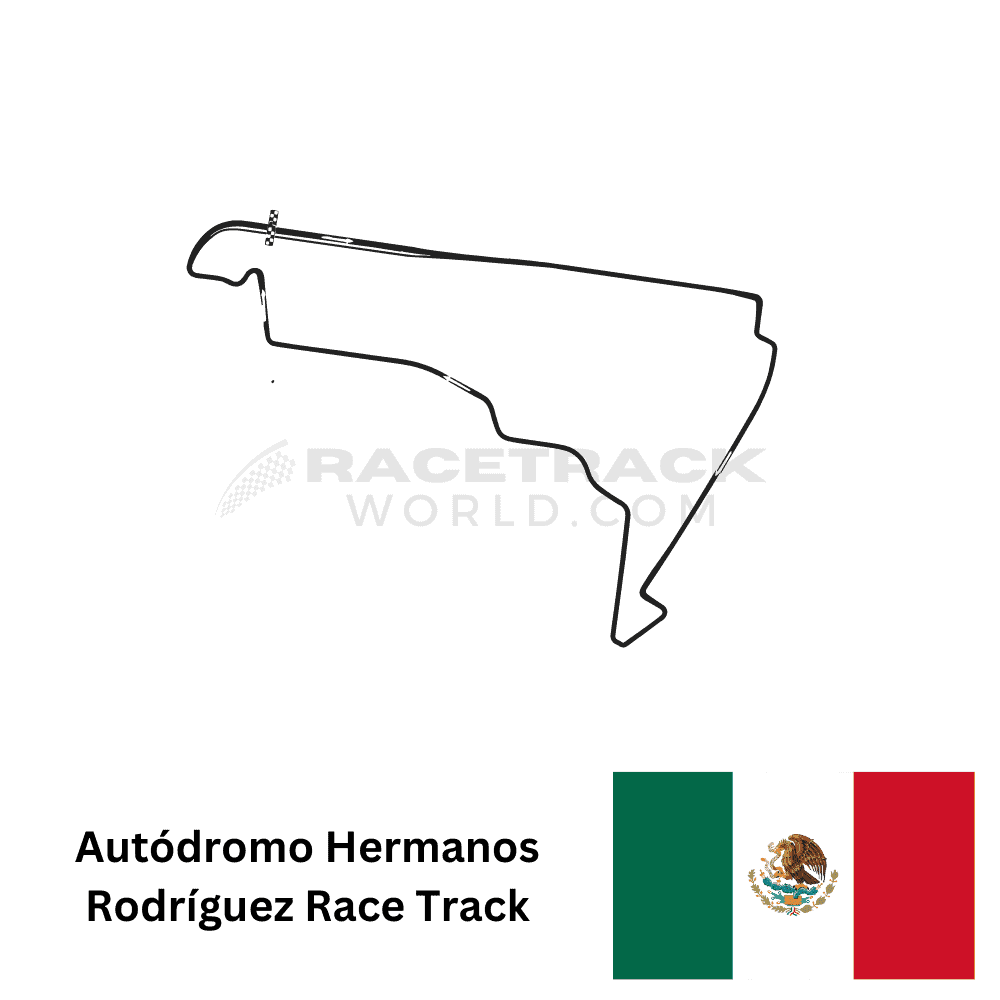
Track map and layout
The lap runs anticlockwise through the tight Esses named for Moisés Solana at Turns 1-3, opens out through a long middle sector of medium and high-speed corners, then dives into the circuit's signature feature: a low, tight stadium section carved through the old Foro Sol baseball ground, now the Estadio GNP Seguros. Grandstands rise on both sides as the track threads between the stands before rejoining the old Peraltada, the once-fearsome banked final corner that Hermann Tilke's 2015 redesign bypassed with a slower left-right combination for safety, leaving only its outer wall as a nod to the original layout. Sitting at roughly 2,240 metres (about 7,350 ft) above sea level, the circuit's thin air cuts aerodynamic drag and downforce alike, producing unusually high straight-line speeds and demanding extra cooling from every car and engine that races there.
Named corners and sections
Esses (Turns 1-3).
A quick left-right-left combination named after Moisés Solana, Mexico's first Formula 1 driver, that opens the lap straight out of the long pit straight.
Foro Sol Stadium Section.
A slow, narrow chicane threaded through the seating bowl of the former Foro Sol baseball stadium (now Estadio GNP Seguros), packed with fans on both sides.
Peraltada.
The legendary high-speed banked final corner used until 2015; a low-speed left-right kink through the stadium section now bypasses most of the original banking, though its outer wall remains visible.
Turn 17 (Mansell Corner).
Named in 2015 for Nigel Mansell, winner of the first two modern-era Mexican Grands Prix in 1986 and 1987.
Events and race weekends
Formula 1's Mexico City Grand Prix is the headline date, run since the circuit's 2015 comeback and extended by contract through the 2028 season; qualifying and the race routinely fill both the main grandstands and the roofed Foro Sol stadium section. Formula E's Mexico City E-Prix has raced on a shortened layout since 2016 (with breaks), and the NASCAR Mexico Series, Súper Copa Telmex and TCR Mexico all hold rounds on the full or partial circuit through the year, alongside karting and club events.
Mexico City Grand Prix
Formula 1hosting contract runs through 2028
Annual eventWhenOCTOctoberMexico City E-Prix
Formula Erun on a shortened street-style layout inside the circuit
Annual eventWhenJANJanuary/FebruaryNASCAR Mexico Series rounds
NASCAR Mexicoone of the series' marquee stops
Annual eventWhen—VariesSúper Copa Roshfrans
Súper Copa Roshfranslong-running Mexican domestic touring/GT series
Annual eventWhen—Varies
Getting there and parking
The circuit sits inside the Magdalena Mixhuca Sports City in eastern Mexico City, about 7 km from Mexico City International Airport and a similar distance from the historic centre. Most fans arrive by metro rather than car, since there is no dedicated spectator parking on site; Metro Line 9 stops right outside the venue, and rideshare or taxi from a hotel is the common alternative. Expect heavy congestion on Viaducto Río de la Piedad and the Río Churubusco ring road around Grand Prix sessions.
- MEXMexico City International Airport (MEX)about 20 mindrive
Parking
No official spectator parking exists at the circuit; the city recommends metro, taxi or rideshare, with a paid shuttle service sometimes running from shopping centres such as Mundo E for Grand Prix weekend.
TipMexico City sits at high altitude, so visitors flying in for race weekend should allow a day to acclimatise before a lot of walking between grandstands, and should plan extra time for metro congestion after the chequered flag.
Hotels and camping near Autódromo Hermanos Rodríguez
Most international visitors base themselves in the central, walkable neighbourhoods of Roma, Condesa or Polanco, all roughly 20-30 minutes from the circuit by car or a metro-plus-rideshare combination, rather than staying near the track itself, which has little hotel stock nearby. Rooms in these areas sell out and rates rise sharply in the weeks around the Formula 1 Grand Prix, so booking several months ahead is standard for race week.
Where to look
Roma and Condesa for boutique hotels, restaurants and nightlife; Polanco for a more upscale, business-district base; all are 20-30 minutes from the circuit by car, metro or rideshare.
Track days, driving experiences and lap records
Autódromo Hermanos Rodríguez is primarily a race-event and public-park facility rather than a regular pay-to-drive venue; outside race weekends its grounds within Ciudad Deportiva host karting, driving schools and occasional club track days rather than the open commercial HPDE or ride-along programmes found at some circuits. Public access to drive or ride the full Grand Prix layout on a routine basis is limited, so anyone wanting circuit time should check directly with the venue or local karting and driving-school operators ahead of a visit.
Lap records
| Category | Time | Driver | Car | Year |
|---|---|---|---|---|
| Formula 1 race lap | 1:17.774 | Valtteri Bottas | Mercedes W12 | 2021 |
| Formula 1 qualifying (unofficial all-time) | 1:14.758 | Max Verstappen | Red Bull RB15 | 2019 |
Drive Autódromo Hermanos Rodríguez in a sim
These racing games and simulators include Autódromo Hermanos Rodríguez as official content. Mods and community tracks are not listed.
iRacing
paid trackLayouts—
F1 25
base gameLayouts—
Building a sim rig? Four example setups from $279 → · Every real track in sim racing games
Checked against each publisher’s track list in October 2026 (read 19 Oct 2026).
Spectator guide
The Foro Sol stadium section is the venue's signature spectator experience, packing tens of thousands of fans into a repurposed baseball stadium bowl around a slow chicane, and is famous for its noise and atmosphere at the end of each Grand Prix lap. Grandstands also line the main straight and several of the faster corners in the middle sector, while general admission areas give a cheaper, more mobile way to see multiple parts of the lap across a race weekend.
Seating
Foro Sol stadium grandstands (the most sought-after and expensive seats), main straight grandstands (Tribuna A and similar), and general admission mounds around the middle sector.
Best places to watch
The Foro Sol stadium section for atmosphere and a view of both the pit exit and final corners; general admission along the middle sector for a cheaper multi-corner view.
Bag policy
Formula 1 event security follows standard clear-bag and prohibited-items rules typical of F1 race weekends; specifics are published closer to each event on the official ticketing site.
Weather
- October-November: dry season, daytime highs around 21-23°C (70-73°F), cool evenings due to the circuit's high altitude
History of Autódromo Hermanos Rodríguez
From Magdalena Mixhuca to a national name
The circuit opened in 1959 as a public park facility inside the Magdalena Mixhuca Sports City, built to give Mexico City a home for motor racing. It hosted early sports-car and Formula 1 non-championship events before being renamed in 1962 in memory of Ricardo Rodríguez, a rising Mexican driver killed there during practice for that year's race weekend, and later his elder brother Pedro Rodríguez, a Formula 1 and sports-car winner who died in a racing accident in Germany in 1971. Together the brothers gave the venue its enduring name.
Formula 1's Peraltada era
Mexico City held a world championship Grand Prix from 1963 to 1970, becoming known for the fearsome banked final corner, the Peraltada, taken at enormous speed with minimal run-off. Spectator overcrowding and safety concerns forced F1 off the calendar after 1970, and the race did not return until 1986, running again through 1992 with an improved facility before high-speed and safety worries once more ended its run.
Redesign and modern revival
After more than two decades away, Formula 1 returned in 2015 following a major Hermann Tilke-led redesign that carved a low-speed stadium section through the seating bowl of the adjoining Foro Sol baseball stadium and bypassed most of the old Peraltada banking. The rebuilt circuit, run at Mexico City's roughly 2,240-metre altitude, quickly became a fan favourite for its raucous stadium-section atmosphere, and the race was rebranded the Mexico City Grand Prix in 2021 to reflect the host city rather than the whole country. A hosting contract announced in the mid-2020s secures Formula 1 at the circuit through the 2028 season, alongside Formula E, NASCAR Mexico and other domestic series that keep the venue busy year-round.
Frequently asked questions
How long is the Autódromo Hermanos Rodríguez circuit?
The Grand Prix layout used since 2015 is 4.304 km (2.674 miles) long with 17 turns.
Who is the circuit named after?
It is named after brothers Ricardo and Pedro Rodríguez, two Mexican racing drivers of the 1960s. Ricardo died during practice at the circuit in 1962, and Pedro was killed in a racing accident in Germany in 1971.
How do you get to the circuit without a car?
Mexico City Metro Line 9 stops at Ciudad Deportiva station right outside the venue; there is no dedicated spectator parking, so metro, taxi and rideshare are the standard ways in.
Why does Formula 1 run so fast at this circuit?
The track sits at roughly 2,240 metres (about 7,350 ft) above sea level, and the resulting thin air reduces aerodynamic drag and downforce, pushing top speeds higher than at sea-level circuits while straining engine cooling.
What is the Foro Sol stadium section?
It is a slow, narrow chicane built through the seating bowl of the former Foro Sol baseball stadium (now Estadio GNP Seguros), one of the most atmospheric grandstand experiences in motorsport.
Until when is Formula 1 contracted to race in Mexico City?
A hosting agreement extends the Mexico City Grand Prix on the Formula 1 calendar through the 2028 season.
Which racing games and sims have Autódromo Hermanos Rodríguez?
Autódromo Hermanos Rodríguez is officially available in iRacing and F1 25. Some of these include it in the base game and others sell it as paid content; the table above shows which.
Other tracks nearby
Facts checked against 6 sources including the official circuit website. Last reviewed 2026-09-11.